
Rheumatoid Arthritis vs Osteoarthritis: Key Differences Explained
Arthritis is a common condition that affects millions of people worldwide, but not all arthritis is the same. Two of the most common types are Rheumatoid Arthritis (RA) and Osteoarthritis (OA). While both affect the joints, they have different causes, symptoms, and treatments.
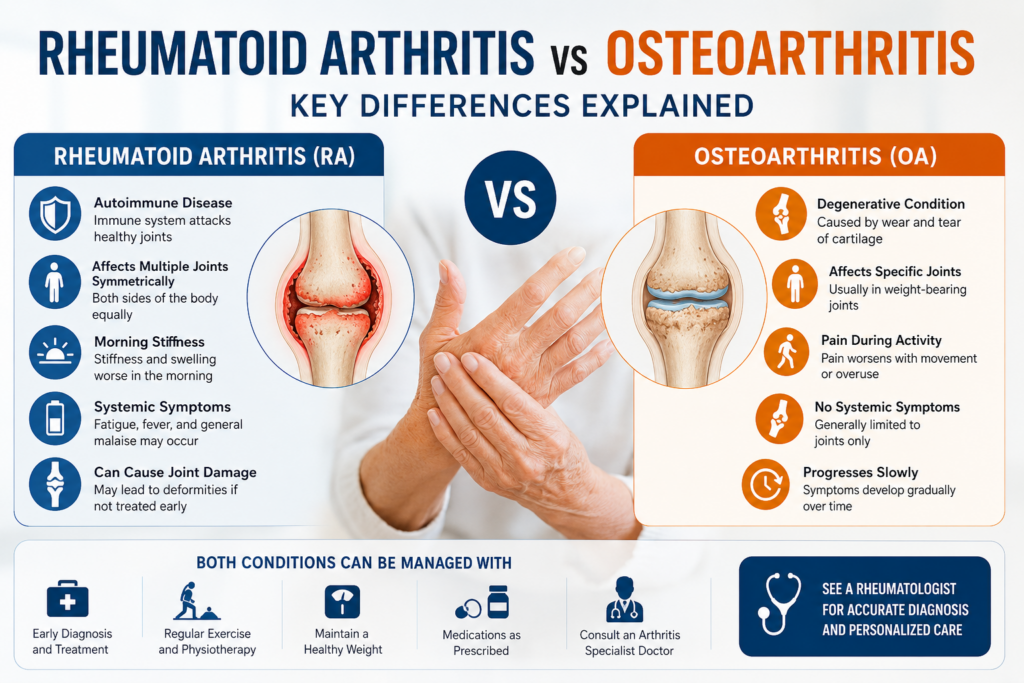
How to Differentiate Rheumatoid and Osteoarthritis
Symptoms can also help differentiate them: OA typically causes joint pain that worsens with activity and improves with rest, while RA often causes joint stiffness and pain that is worse in the morning or after periods of inactivity. If you notice persistent joint swelling, pain, or stiffness, seeing an Arthritis Specialist doctor can help confirm the diagnosis.
Understanding Rheumatoid vs Osteoarthritis: A Guide
5 Key Differences Between Rheumatoid and Osteoarthritis
- Cause – RA is an autoimmune disease, while OA is due to cartilage wear and tear.
- Age of Onset – RA can occur at any age; OA is more common in older adults.
- Symptoms – RA causes morning stiffness and swelling; OA causes joint pain during activity.
- Joint Pattern – RA often affects joints symmetrically; OA usually affects specific joints.
- Systemic Effects – RA can cause fatigue, fever, and general weakness; OA is mostly limited to joints.
Understanding these differences helps in choosing the right treatment plan. A Rheumatologist in Pune can recommend medications, lifestyle changes, and therapies tailored to your type of arthritis.
Top 7 Facts About Rheumatoid and Osteoarthritis
- Rheumatoid arthritis is chronic and autoimmune – it can affect the whole body, not just the joints.
- Osteoarthritis is degenerative – it worsens over time due to cartilage breakdown.
- RA can lead to joint deformity – early treatment can prevent severe damage.
- OA often develops slowly – symptoms appear gradually over years.
- RA affects women more than men – hormonal factors may play a role.
- OA is more common in people with previous joint injuries – repeated stress can accelerate degeneration.
- Early diagnosis matters – both RA and OA benefit from timely intervention to manage pain and improve mobility.
What Are the Main Differences Between Rheumatoid and Osteoarthritis?
Seeking guidance from an Arthritis Specialist doctor ensures you get proper tests such as blood work, X-rays, or MRIs to accurately identify the type of arthritis you have.
How Do Rheumatoid and Osteoarthritis Compare?
Lifestyle adjustments like maintaining a healthy weight, exercising regularly, and avoiding overuse of affected joints are beneficial for both conditions. A Rheumatologist can guide you in creating a customized care plan.
Rheumatoid vs Osteoarthritis: Unraveling the Differences
To summarize, the key differences between RA and OA are:
| Feature | Rheumatoid Arthritis (RA) | Osteoarthritis (OA) |
| Cause | Autoimmune disease; body’s immune system attacks joints | Degenerative; wear and tear of cartilage over time |
| Age of Onset | Can occur at any age, commonly 30-60 years | More common in older adults, usually 50+ years |
| Joint Pattern | Symmetrical; affects both sides of the body | Usually affects specific joints, often weight-bearing ones |
| Symptoms | Morning stiffness, swelling, pain, fatigue, possible fever | Pain during activity, stiffness after rest, joint crunching or clicking |
| Systemic Effects | Can affect skin, eyes, heart, and other organs | Mostly limited to joints, no systemic symptoms |
| Progression | Can progress rapidly without treatment; may cause deformities | Slow progression; primarily affects joint function and mobility |
| Treatment Approach | Disease-modifying drugs, immunosuppressants, lifestyle changes | Pain relief, physical therapy, joint support, surgery in severe cases |
Recognizing these differences early allows you to seek the right treatment and prevent long-term joint damage. Both conditions require medical supervision, and consulting an Arthritis Specialist doctor is the first step toward effective management.
Conclusion
Rheumatoid arthritis and osteoarthritis may seem similar because both involve joint pain, but they are very different conditions with distinct causes, symptoms, and treatments. Early diagnosis and professional guidance are key to managing both effectively. If you experience joint pain, swelling, or stiffness, don’t wait — reach out to an Arthritis Specialist doctor for proper evaluation and treatment. Early care can help you maintain mobility, reduce pain, and improve your quality of life.
FAQs
Q1. How can I tell if I have RA or OA?
Q2. Can RA or OA be cured completely?
Q3. Which doctor should I consult for joint pain?
An Arthritis Specialist doctor in Pune or a rheumatologist can provide accurate diagnosis and personalized treatment.